WHAT’S ON THIS SUBSTACK AND WHY MIGHT YOU CARE?
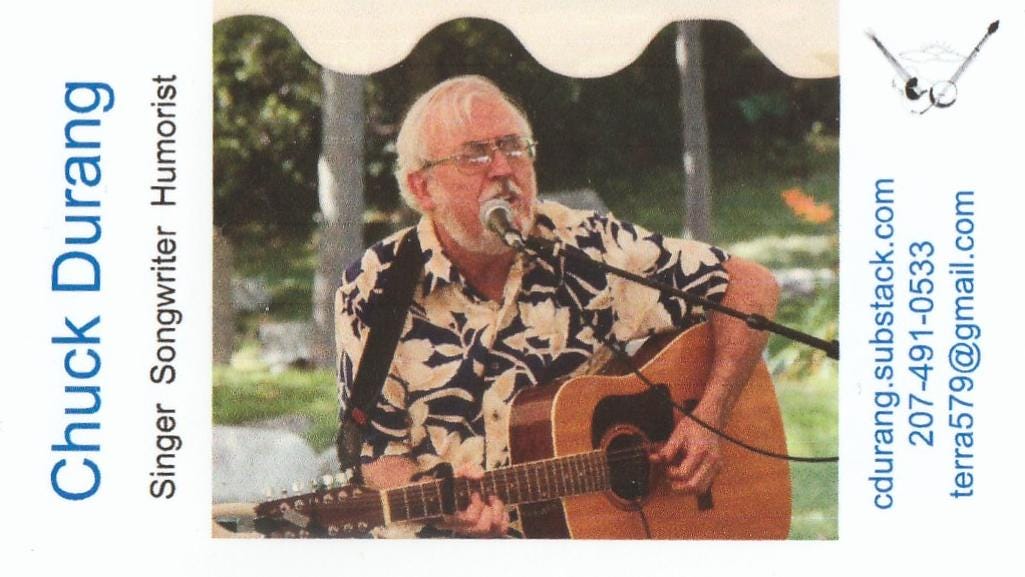
In the Spring of 1958, my senior year in high school, I was having my breakfast (probably Rice Krispies) and watching The Today Show, when something very unusual appeared on my TV screen.
It was three young men in striped shirts, playing guitars (and one banjo) and singing a song called Tom Dooley. They were called The Kingston Trio. On Today? I was transfixed. Remember, this was the beginning of the “folk revival,” before rock ‘\n’ roll, the Beatles, and Elvis. The radio was filled with Perry Como, Patti Page, Dean Martin and Nat King Cole. (I liked them all.)
I didn’t realize, that day, that my life had changed. But I went to Libertyville-Fremont High School in Illinois, and buttonholed every classmate I could find and raved about this New Thing I had seen on television. They of course smiled at me indulgently and walked away, twirling a finger at their temples…
Fast forward to the Fall of that year. As a new freshman at Northwestern University, I discovered that that same Trio was about to present a concert there! I wanted, needed, and arranged to attend. Not only did I mightily enjoy the show, but I left thinking “That looks like a great way to make a living! What fun they seem to be having on that stage!”
Now you have to understand that was not a reasonable aspiration for me. I had done a lot of acting in high school (and even a few grade school) plays, but had never gotten a part in any musicals based on the fact that I could not carry a tune, play an instrument or, much less, sing a note!
Nevertheless, the next morning I found myself at a local music store focused on purchasing a guitar. The only one I could afford was a used steel-string model, with the strings so high above the fretboard that it could have doubled as a cheese slicer. I held it with the neck pointing over my left shoulder, and with it over the right shoulder, and asked the salesman if he could reverse the strings and make it “left-handed.”
He looked baffled and said, “Most people who have never played before hold it right-handed, the way most people do.”
I said, “It just feels more comfortable left-handed. That might make the difference.” It never occurred to him that this rookie was already planning on turning pro despite a total lack of experience or talent, but he was willing to have it made left-handed on order to make the sale.
There followed many months of driving my dorm-mates crazy with the sounds of my trying to tune the thing—I couldn’t tell whether two sounds I was trying to compare were the same, close to each other, or not even in the same zip code. The only stranger noise was created by a dorm-mate who periodically rattled his coffee spoon around a in shower stall for reasons even he could not explain or justify.
Nevertheless, within a year I was being paid to perform in local coffeehouses and bars! (Now, you do have to remember that, at that time, when the Great Folk Music Scare was in full swing, any kid who could make three chords on a guitar and sing a little could get booked…). After I joined Chi Psi fraternity, I recruited two of the brothers to join me in a Kingston-like trio. Calling ourselves The Sundowners (I had recently seen the Robert Mitchum movie of that title), we had a weekly campus radio show, various club bookings, and concerts at Northwestern, Marquette, and Illinois. Inspired by Kingston leader Dave Guard, I even built my first (left-handed) long-necked five-string banjo...
From my graduation in 1962 (I had originally intended to attend the Medill School of Journalism, but at the last minute switched to the School of Speech, where my classmates in their world-class Theater and Radio-TV-Film—my major—Departments included Ann-Margret, Karen Black, Tony Roberts, and David Seltzer [author of The Omen and other movies]) to the present day, I have done music part-time and full-time, as a hobbyist and as a professional, in small clubs and large auditoriums, before audiences of 25 to 500, and from coast to coast (Washington to Washington).
I helped launch the Folk Revival as one of the founders of Chicago’s Old Town folk/entertainment district, operated The Burning Bush in that hotbed of beatnik culture, Des Moines, and performed throughout the intermountain West, in the Army, and as front man for groups like The Small World Singers, The Visitors, Just Four, and Harmony Gritz.
Clicking on the Songs tab will let you see and hear many of these. Selecting Humor or Stories will show you tales of how this happened, by me or to me, including nine chapters of We Were All Folksingers and six of How I Surviived the Great Folk Music Scare. Subscribing—always free—will get you each new posting (2-3 a week) to your Inbox. (Some day, I may offer for sale a few books and CD downloads or albums
If you are a fan of The Kingston Trio, Bob Gibson (the folksinger, not the St.Louis pitcher), Pete Seeger, The Weavers, Tom Paxton, Rod McKuen, John Prine, Steve Goodman, Gordon Lightfoot, Harry Chapin, or The Limeliters, you may like what is here. Like the Kingstons, I did not feel I could claim to be an authentic “folksinger” (I always liked their description of themselves as “performers of folk-oriented material”), and am happy to be labeled a “singer/songwriter” in the field.
I hope you like what you find here, and let me know what you think by way of commenting on any post or contacting me in any way. Enjoy!
